- Jul 7
What Dubai Real Estate Agents Need to Know to Actually Protect Their Clients
- Olga Sinenko
- 0 comments
There is a version of real estate advice that sounds professional but is essentially useless. It involves recommending popular areas, quoting current rental yields, and letting the client decide. It's what happens when an agent knows the product but doesn't understand the strategy behind the purchase.
In Dubai, that gap is expensive. The market moves fast, supply pipelines are large, and overseas investors - who make up a significant portion of buyers - are making decisions remotely based almost entirely on the advice they receive. If that advice isn't grounded in proper market analysis, the consequences show up two or three years later when the client can't sell, the yield has dropped, or the capital growth they were promised simply never arrived.
The first thing every agent needs to understand: one property cannot do everything
Investors often walk in expecting a single purchase to generate strong rental income, grow in capital value, hold safely if the market softens, and potentially resell quickly for a profit. That is not how it works.
Every property has one job it does well. Rental income assets are usually not the strongest capital growth plays. Capital growth areas carry risk that wealth preservation capital cannot absorb. And projects being marketed as all three at once - income, growth, and safety - are usually better at selling brochures than delivering returns.
Before recommending anything, the conversation has to start with one question: what does this investor actually need this property to do? The answer changes everything that follows - which area, which unit type, which developer, which payment structure, and what exit looks like.
Understanding oversupply before it becomes your client's problem
One of the most consistent ways investors lose positioning in Dubai is buying in high-supply zones without understanding what that means for their specific unit.
Areas like Jumeirah Village Circle and parts of Business Bay are not bad places to live. They are active, central, and well-connected. The problem is scale. When thousands of similar units - mostly studios and standard one-bed apartments - are delivered into the same postcode within the same window, the investor is no longer competing with the market in general. They are competing with the building next door.
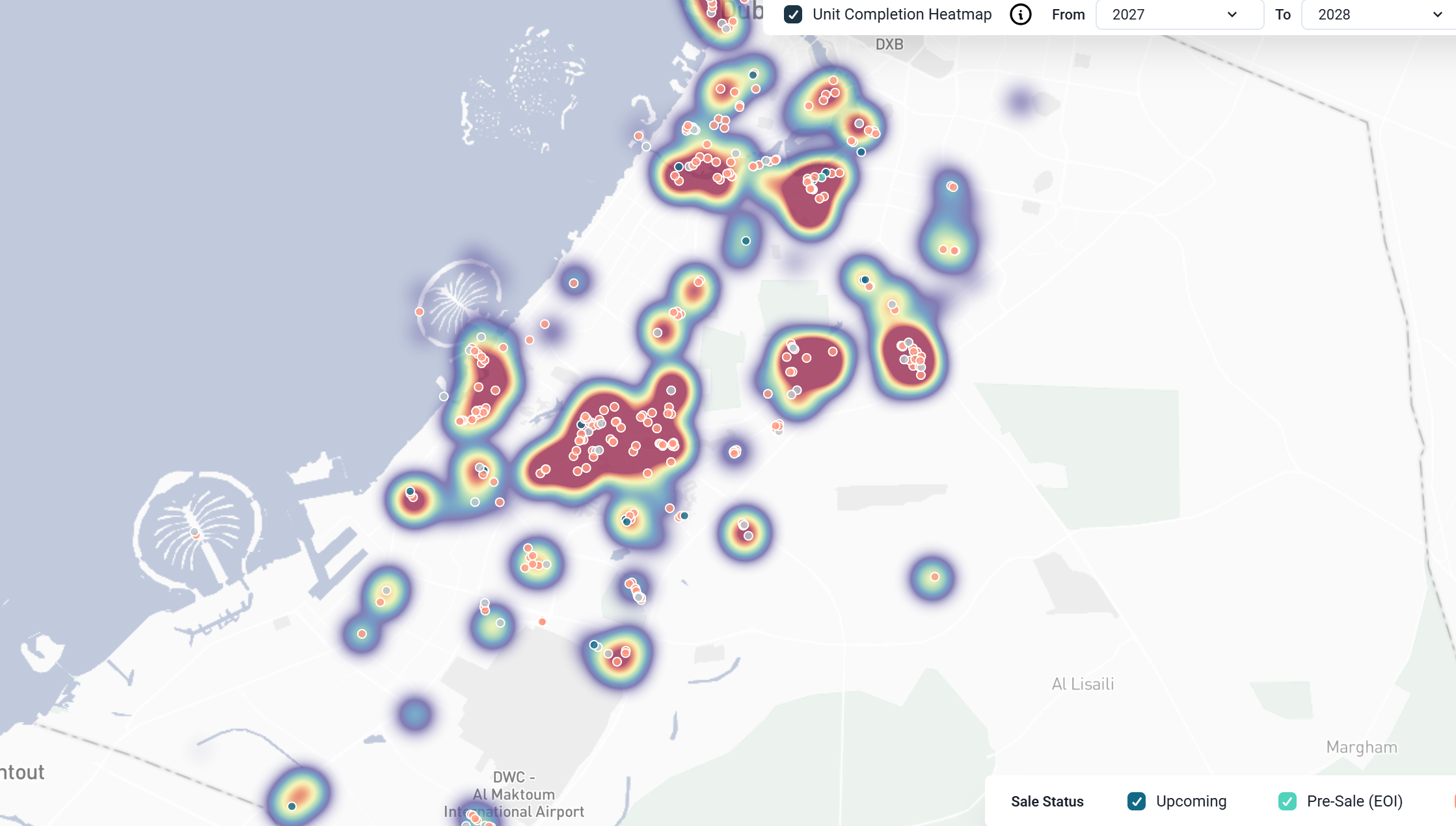
This Map represent supply of 1br units in 2028 only. (propertymonitor.ae)
Tenants have options. If the rent is too high, they move. If the unit is not differentiated, they negotiate. When the investor wants to resell, buyers behave exactly the same way. Yields in these areas can look acceptable on paper - 6 to 7% - but capital growth goes sideways when supply peaks, and the exit becomes difficult in slower markets.
An agent who understands supply pipelines can identify these risks before the client commits. That means knowing not just what is available today, but what is being delivered over the next 24 to 36 months in the same micro-location — and whether the demand profile can absorb it.
Matching the right area to the right goal
Once the investor's goal is clear, the recommendation becomes much more specific.
For rental income, areas like Al Furjan, Discovery Gardens, and parts of DLRC offer lower entry prices and consistent practical demand. People rent here because it is affordable and functional. Yields can sit at 7 to 8% when the deal is structured correctly. The focus for income investors should be on service charges, tenant profile, vacancy risk, and ease of management — not on headline growth numbers.
For capital growth, the conversation shifts to where infrastructure and demand are moving ahead of supply. Dubai South benefits from confirmed expansion at Al Maktoum Airport. Jumeirah Garden City is positioned between the beach and DIFC. Dubai Creek Harbour still has room to mature as connectivity improves. These are areas where value is created because the infrastructure arrives before the market fully prices it in. Clients buying here need patience and a realistic timeline — this is not a one-year strategy.
For wealth preservation, established locations like Palm Jumeirah, Downtown Dubai, Dubai Hills, City Walk, and Bluewaters offer stability, liquidity, and long-term demand. These areas behave like prime districts in global cities - they attract high-quality tenants and buyers across market cycles. Yields are lower, typically 4 to 5%, because entry prices and service charges are higher. But the asset holds, and it is easier to exit cleanly when needed.
The unit matters as much as the area
Even inside premium locations, the difference between a strong purchase and a weak one can be significant. In a Burj Khalifa address, a unit with a direct tower view and one without can differ by 20 to 50% - in sale price and in rental value. Same building, same floor plan, completely different investment performance.
Here is the Example (propertyfinder.ae)
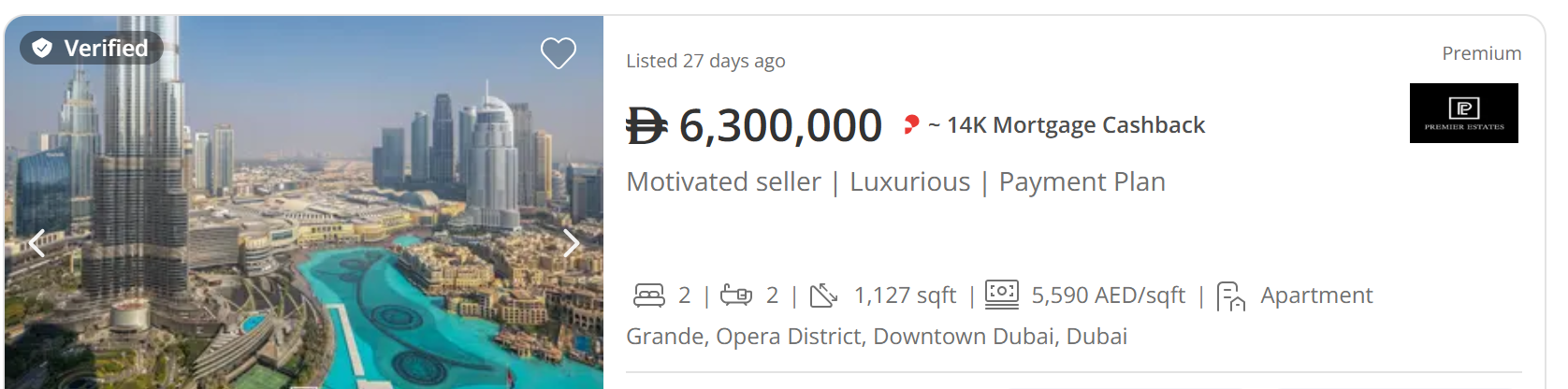
same Building same type of the unit different view

50% less in price.
That gap exists across most premium locations in Dubai. Which means advising a client to buy in the right area is only half the job. The specific unit still has to have something that makes it harder to replace - a view, a floor, a layout, a scarcity factor. Without that, even a good postcode produces a mediocre result.
Why overseas investors depend on this level of advice
International buyers cannot walk the streets, compare buildings in person, or read local market signals the way a resident can. They are making significant financial decisions remotely, often in a market they are entering for the first time, based almost entirely on the expertise of the professional advising them.
That is not a small responsibility. And it is exactly why the quality of analysis behind the advice matters more than the quality of the sales pitch in front of it.
Our training for real estate professionals in Dubai is built around this. Not only product knowledge or closing techniques. But the ability to read supply data, match investment goals to the right asset type, structure a recommendation that holds up over time, and give overseas clients the kind of clarity that actually protects their capital.
If you work with international investors and want to operate at that level, get in touch.